As any Art major would tell you, getting paid art opportunities is very important. However, the process of actually getting that work can be time-consuming and frustrating. So, to help you increase your chances of getting selected for that next open call or gallery exhibition, here are a couple of tips I’ve learned both in college courses and through hands-on experience.
Have good writing
To paraphrase one of my Portfolio Emphasis course professors, “your art does only 10% of the work, the other 90% is your writing.” This couldn’t be more true! The reality is that most art opportunities get dozens or even hundreds of applications that selection committees are trying to get through as quickly as possible. So, to do this, they will often start ruling people out by looking at their writing. If someone doesn’t write well, they may automatically deem them “unprofessional” and throw out their application immediately.
Honestly, most selection committees will likely rule you out on account of your writing before they even look at your past work or your proposal, so do whatever you need to do to make your writing as professional as possible! Regardless of whether you’re a good writer, you should have multiple people proofread your application, if possible, since their fresh eyes will likely pick up on things you missed.
Follow any submission instructions provided
Similarly to the last point, make sure you follow any and all submission instructions provided in the application description. These criteria can range from including a specific number of previous works, to organizing application elements in a specific order, even to naming files a certain way.
Ultimately, following any submission guidelines provided will show that you both read and follow instructions, which is a very important quality to have. If you don’t follow instructions, the selection committee can automatically assume that you didn’t read the instructions or you don’t take instructions well, thereby automatically ruling you out.
Have a properly formatted art resume
While you may be tempted to grab a standard resume template online and quickly fill it out, you may be surprised to learn (like I was) that art resumes are formatted differently from standard ones. There’s a great resource by the College Art Association (that I’ll link to at the end of this post) that details the widely-adopted conventions of art resumes. And while what’s on your resume is more important than how it’s formatted, having a correctly-formatted resume will automatically give you an edge over someone whose resume is incorrectly-formatted.
Use past works that relate to the project you’re applying to
This one may seem obvious, but if you’re responding to a call for acrylic paintings, include past examples of your acrylic paintings. Or if a show is looking for pattern-heavy works, include pattern-heavy works. Knowing that you have produced works in the past that fit the requirements of the project will give the selection committee some extra confidence in you and your work.
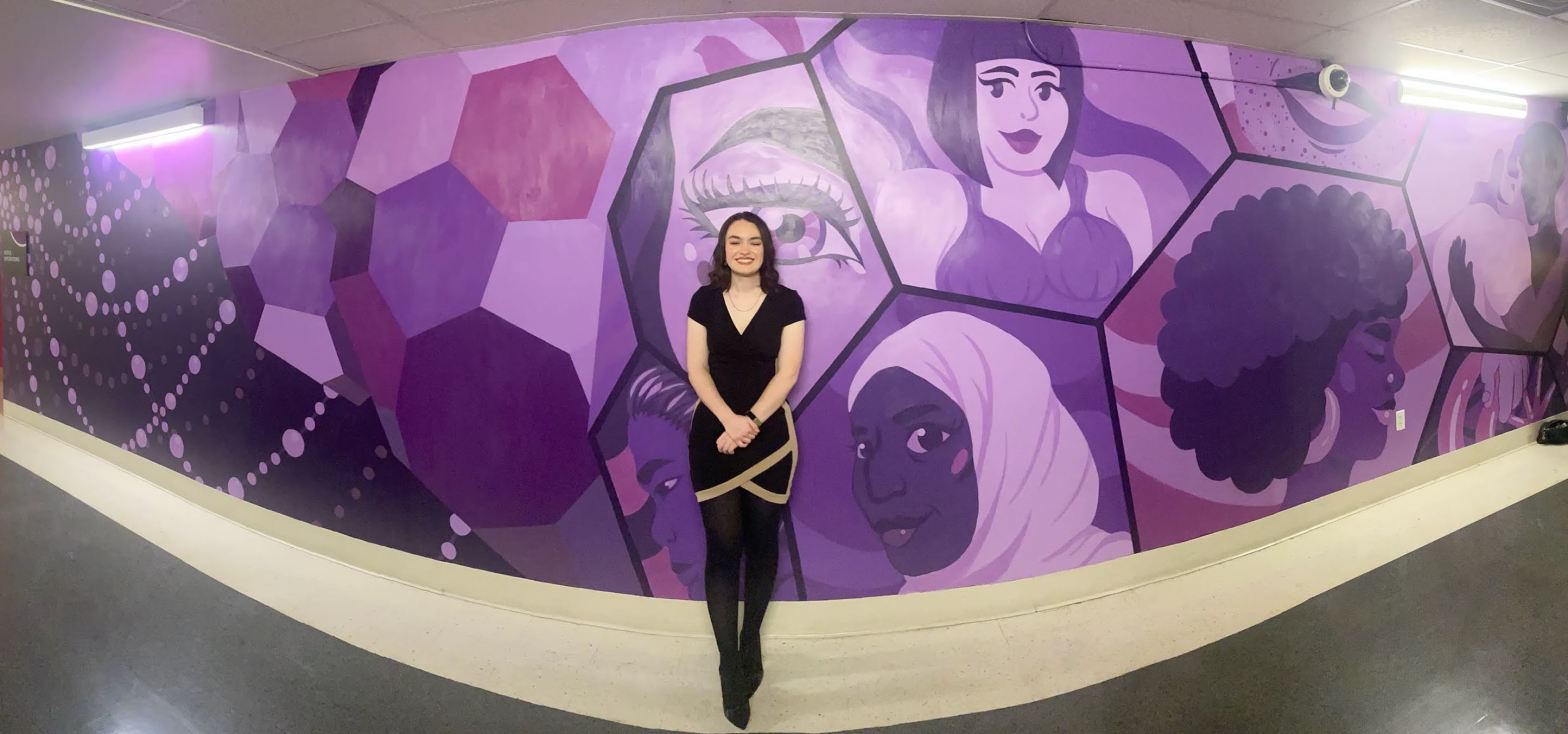
For example, when I applied to the Cosmopolitan of Las Vegas’ Diversity in Art mural scholarship, I included a backyard mural I had done for my sister in my application. And regardless of if a work exactly relates to the call, include it if you consider it your best work or most representative of your work.
Apply, apply, apply
This is probably the least helpful thing I’ve said so far because you’ve heard it a million times, but it’s honestly so important. The more projects you apply to, the higher your odds are of getting accepted. And the higher your odds of getting accepted, the more likely you’ll be to get key resume entries that will help you apply to bigger and better projects.
And don’t get discouraged if you don’t get accepted to your first few projects, this is why you’re supposed to apply, apply, apply! Besides, oftentimes if you respectfully ask why your application wasn’t chosen, a selection committee member may outright tell you, it’s as simple as that. If you can get that information, you can learn what you need to change for the next application, thereby increasing your chances.
Conclusion
There are countless other tips I could give you but, ultimately, as long as you present your work well, inevitably someone will see your potential and give you that “first break” you’re looking for. All it takes is a little patience and persistence.
P.S. – If you’re in the Clark County area, check out the Clark County Public Art Calls page linked below for local opportunities!
Links
College Art Association Artist Resume Standards & Guidelines
 Ellie Cat Art